Sunday, 23 March 2014

Martin Scorsese's film about The New York Review of Books to feature MM (with a little bit of help from bloggerlees)

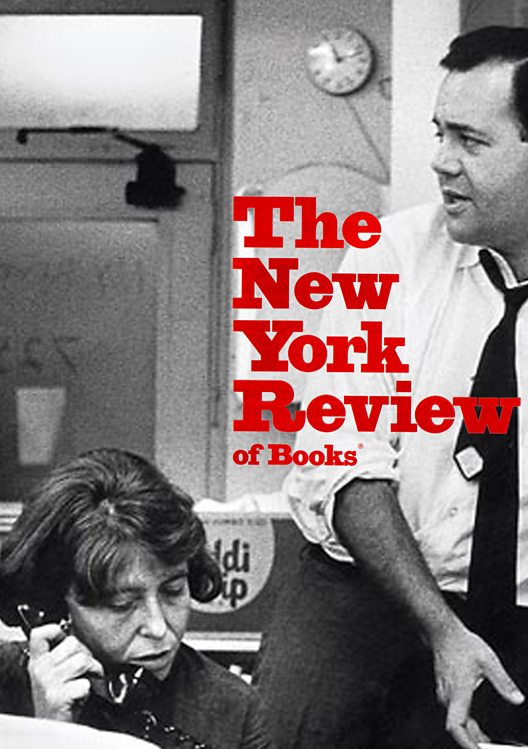
The New York Review of Books

In anticipation of the Review’s 50th anniversary, editor Robert Silvers and publisher Rea Hederman came to Martin Scorsese with the idea of making a film about the magazine. An avid reader since his college days at NYU where he “wouldn’t miss an issue,” Scorsese eagerly agreed.
Directed byMartin Scorsese & David Tedeschi
It’s no accident that the sole source of consistent, fact based analysis in the United States following the attacks of September 11, 2001 was found within the pages of The New York Review of Books. In the early days of the “War on Terror” and the build up to the wars in Afghanistan and Iraq, the Review published many pieces that even now, 12 years later, still appear truthful and incisive. “Torture and Truth,” Mark Danner’s article on enhanced interrogation, based on a confidential Red Cross report, was a watershed moment when many people began to see the events of the Bush Administration in a new light. This is one of many crowning moments for The New York Review of Books.
No one could stop us. We could do what we wanted in any wayRobert Silvers, Editor - The New York Review of Books
In its inaugural issue 50 years ago, the Review distinguished itself immediately with an enviable roster of some of the most illustrious writers and thinkers of their time: Norman Mailer, Gore Vidal, Susan Sontag, William Styron, W.H. Auden, Mary McCarthy and many others who would go on to do some of their best work within the pages of the Review. The film will tell the story of the shared spirit of inspiration that brought that first issue to press: Elizabeth Hardwick writing “The Decline of Book Reviewing” for Harpers magazine, which argued that a new kind of literary journal – assionate, engaged, truly literary – was needed. The impromptu dinner party that brought Hardwick and her husband Robert Lowell to the table of their neighbours, book editors Jason and Barbara Epstein. Jason Epstein’s flash of clarity that a New York City newspaper strike had given them a golden opportunity to launch the publication of their dreams. The next day Jason Epstein called Robert Silvers to recruit him as editor and he in turn recruited Barbara. The founders launched the Review from Hardwick’s premise, but it grew large part from the hard work, imagination and sensibility of its editors, Barbara Epstein and Robert Silvers.
The New York Review of Books

Thursday, 20 March 2014

HELLMAN v. McCARTHY A world-premiere play by Brian Richard Mori Directed by Jan Buttram


Abingdon Theatre Company continues its 21st Season with literary legends at war in

HELLMAN v. McCARTHY
A world-premiere play by Brian Richard Mori
Directed by Jan Buttram

Limited Engagement! Off-Broadway performances March 14-April 13, 2014
at Abingdon Theatre Company's June Havoc Theatre (312 West 36th Street).

Starring
Emmy Award-winner Dick Cavett
Drama Desk and Obie Award-winner Roberta Maxwell
Tony Award-nominee Marcia Rodd

with Peter Brouwer, Rowan Michael Meyer and Jeff Woodman.

Abingdon Theatre Company—which has produced 82 new American plays since 1993—continues its 21st Season with HELLMAN v. McCARTHY by Brian Richard Mori (author of Adult Fiction and Bedtime Stories), with previews set to begin March 14, prior to an official press opening March 26 in Abingdon Theatre Arts Complex's June Havoc Theatre (312 West 36th Street). Off-Broadway performances run through April 13. Jan Buttram, Artistic Director of Abingdon Theatre Company, is set to direct this world-premiere production.

The greatest literary feud in modern American history began on January 25, 1980 when literary critic Mary McCarthy appeared as a guest on "The Dick Cavett Show" and declared that "every word [playwright Lillian Hellman] writes is a lie, including 'and' and 'the.'" Hellman went ballistic and sued McCarthy for libel, sparking a law suit that spanned more than four years. HELLMAN v. McCARTHY is a roller coaster ride filled with comedy and pathos.


As previously announced, Emmy Award-winner Dick Cavett ("The Dick Cavett Show," Into the Woods, The Rocky Horror Show) is set to portray himself, recreating his role in the historical events depicted in HELLMAN v. McCARTHY.

Joining Mr. Cavett are Drama Desk and Obie Award-winner Roberta Maxwell (Equus, Ivanov, Brokeback Mountain) as Lillian Hellman and Tony Award-nominee Marcia Rodd (Shelter, Last of the Red Hot Lovers, "Trapper John, M.D.") as Mary McCarthy.

Completing the cast are Peter Brouwer (Lost on the Natchez Trace, Bodega Bay), Rowan Michael Meyer (Flea's Benito Cereno, APAC's Blood Brothers), and Jeff Woodman (Cymbeline, A Pirate's Lullaby).

The design team includes set design by Andrew Lu, lighting design by Travis McHale, costume design by Tony Award-nominee Jane Greenwood, and sound design by Ian Wehrle. Production Stage Manager is Mark Hoffner.

Abingdon Theatre Company launched its 21st Season of producing new American plays with the world premiere of Fix Me, Jesus by Helen Sneed, directed by Sam Pinkleton, this past November. Jan Buttram is Artistic Director and Heather Henderson is Managing Director of Abingdon Theatre Company.

Off-Broadway performances of HELLMAN v. McCARTHY run March 14-April 13: Tuesdays, Wednesdays and Thursdays at 7pm; Fridays at 8pm; Saturdays at 2pm and 8pm; and Sundays at 2pm at Abingdon Theatre Company's June Havoc Theatre (312 West 36th Street, between 8th and 9th Avenues). All tickets are $40. For tickets, call 866-811-4111 or visit www.abingdontheatre.org.

DECLINES

“Yet in reality nothing is as bad as it seems (or as in logic, it ought to be).”

theparisreview:

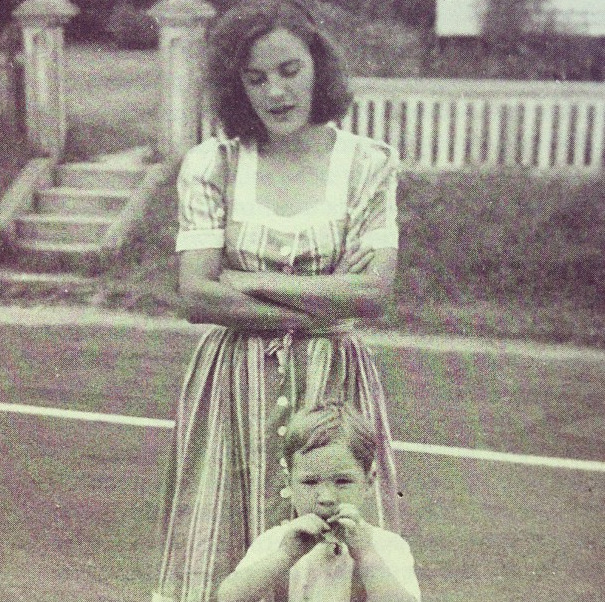
Mary McCarthy and her son, Ruel, at their home in Wellfleet, Massachusetts, from McCarthy’s feature on her marriage to Edmund Wilson in our Summer 1991 issue. Writes McCarthy, “Yet in reality nothing is as bad as it seems (or as in logic, it ought to be).”

Mary McCarthy and her son, Ruel, at their home in Wellfleet, Massachusetts, from McCarthy’s feature on her marriage to Edmund Wilson in The Paris Review. Writes McCarthy, “Yet in reality nothing is as bad as it seems (or as in logic, it ought to be).”

Wednesday, 5 February 2014

Happy Centenary William Burroughs from Mary McCarthy - "like the groom in a shotgun literary wedding".


BOOKS & WRITERS
II II
Burroughs’ "Naked Lunch'
By Mary McCarthy

LAST summer at the International Writers’
Conference in Edinburgh, I said I thought
the national novel, like the nation-state, was
dying and that a new kind of novel, based on
statelessness, was beginning to be written. This
novel had a high, aerial point of view and a
plot of perpetual motion. Two experiences, that
of exile and that of jet-propelled mass tourism,
provided the subject matter for a new kind of
story. There is no novel, yet, that I know of,
about mass tourism, but somebody will certainly
write it. Of the novel based on statelessness, I
gave as examples William Burroughs’ The
Naked Lunch, Vladimir Nabokov’s Pale Fire
and Lolita. Burroughs, I explained, is not
literally a political exile, but the drug addicts
he describes are continually on the move, and
life in the United States, with its present narcotics
laws, is untenable for the addict if he does
not want to spend it in jail (in the same way,
the confirmed homosexual is a chronic refugee,
ordered to move on by the Venetian police, the
Capri police, the mayor of Provincetown, the
mayor of Nantucket). Had I read it at the time,
I might have added Gunter Grass’ The Tin
Drum to the list: here the point of view, instead
of being high, is very low, that of a dwarf; the
hero and narrator is a displaced person, born in
the Free City of Danzig, of a Polish mother
(who is not really a Pole but a member of
minority within Poland) and an uncertain father,
who may be a German grocer or a Polish postal
employee. In any case, I said that in thinking
over the novels of the last few years, I was
struck by the fact that the only ones that had
not simply given me pleasure but interested me
had been those of Burroughs and Nabokov. The
others, even when well done (Compton-Burnett),
seemed almost regional.
This statement, to judge by the British press,
was a shot fired round the world. I still hear
its reverberations in Paris and read about them
in the American press. I am quoted as saying
that The Naked Lunch is the most important
novel of the age, of the epoch, of the century.
The only truthful report of what I said about
Burroughs was given by Stephen Spender.
But nobody seems to have
paid attention to Spender any more than anyone
paid attention to what I said on the spot. WhenI
chided one reporter, Malcolm Muggeridge, in
person with having terribly misquoted me in
the New Statesman, he appeared to think that
there was not much difference between saying
that a book was one of two or three that had
interested you in the last few years and saying
that it was one of the "outstanding novels of the
age." According to me, the age is still Proust,
Joyce, Kafka, Lawrence, Faulkner, to mention
only the "big names," but to others evidently
the age is shrinking to the length of a publishing
season, just as a literary speaker is turned
into a publisher’s tout. The result, of course,
is a disparagement of Burroughs, because if
The Naked Lunch is proclaimed as the masterpiece
of the century, then it is easily found
wanting. Indeed, I wonder whether the inflation
of my remarks was not at bottom malicious;
it is not usually those who admire Burroughs
who come up to me at parties to announce: "I
read what you said at Edinburgh." This is true,
I think, of all such publicity; it is malicious in
effect whatever the intention and permits the
reader to dismiss works of art and public figures
as "not what they are cracked up to be." A
similar thing happened with Dr. Zhivago, a
wonderful book, which attracted much hatred
and venom because it was not Tolstoy. Very
few critics said it was Tolstoyan, but the impression
got around that they had. Actually, as I
recall, the critics who mentioned Tolstoy in
connection with Pasternak were those bent on
destroying Pasternak’s book.
As for me, I was left in an uncomfortable
situation. I did not want to write in to the
editors of British newspapers and magazines,
denying that I had said whatever incontinent
thing they had quoted me as saying. This would
have been ungracious to Burroughs, who was
the innocent party in the affair and who must
have felt more and more like the groom in a
shotgun literary wedding, seeing my name
yoked with his as it were indissolubly.

Tuesday, 4 February 2014

Mary McCarthy Remembered at long last (by Posh folk massaging a de-politicized contruct) - from the Vassar Hub

Mary McCarthy Remembered

Longtime friends, colleagues, and admirers of author Mary McCarthy ’33 and the author’s granddaughter, Sophia Wilson ’03, assembled at the Liederkranz Foundation on Manhattan’s Upper East Side on January 16. They continued the celebration of the 100th anniversary of the writer’s birth in 1912 and the 50th anniversary of the publication of her novel The Group in 1963.
4 / 10
Rosamond Bernier, founder of the French magazine L'ŒIL, spoke of McCarthy’s supportive friendship.

At the event, sponsored and organized by the New York Society Library, Vassar Professor Emeritus of Classics Robert Pounder, who also serves as special assistant to the president at the college and as emcee for the event, stated: “There can be no denying the influence of Mary McCarthy on the cultural and political climate of this country in the 20th century.” He noted not only the number of her publications but their “astonishing variety, subtlety, sophistication, erudition, precision, and scope.”  
McCarthy wrote about literature, theatre, politics, history, the social scene, art, and architecture for such publications as Harper’s magazine, the New Republic, the Nation, the New York Review of Books, and Partisan Review (for which she also served as an editor), even as she composed what Pounder called “short stories and novels of engaging humor, satirical verve, and psychological insight.” Some might say foresight, as The Group is said to have influenced such contemporary fare as Sex and the City.
Feminist film critic Molly Haskell spoke about the novel and its film adaptation by Sidney Lumet, reflecting on how influential (and controversial) the film—and the bestselling book—was at the time. There had been many depictions of men’s rites of passage, she noted, but “The Group was remarkable in that it showed women’s rites of passage. It was even viewed among some young women as a manual for how to get contraception.” [One passage described a character’s efforts to obtain a diaphragm.]

Presenters Sophia Wilson ’03, Jane Kramer ’59, Ron Patkus, Frances Kiernan, Thomas Mallon, and emcee Robert Pounder.

Presenters Sophia Wilson ’03, Jane Kramer ’59, Ron Patkus, Frances Kiernan, Thomas Mallon, and emcee Robert Pounder.
Haskell also noted that “The Group was one of the first vehicles to show the disconnect between men and women after sex.” She argued one would have to look to the present-day HBO hit Girls for anything comparable.
Most presenters had known McCarthy personally and reminisced about the woman herself—her formidable intelligence, style, wit, and, not least, her “famous Mary McCarthy smile.” They spoke about the innumerable ways in which she enriched their lives.
Robert Silvers, editor of the New York Review of Books and longtime friend of McCarthy, recounted the breadth of assignments he had given her over the years—from a review of William Burroughs’ Naked Lunch to a story about America’s involvement in Vietnam. According to Silvers, she agreed to the latter only on the condition that she fly first class.
New Yorker columnist Jane Kramer ’59, who has written the “Letter from Europe” column for the New Yorker since 1981, had known McCarthy since the 1960s. They had become close friends when they lived as neighbors in Paris. Kramer spoke of McCarthy’s “generosity of heart and mind,” which made her an excellent mentor. “If you were a writer and you were her friend, she wanted you to know how a sentence worked,” she recalled.

Robert Pounder with Robert Silvers, editor of the <em>New York Review of Books</em> and longtime friend of McCarthy.

Robert Pounder with Robert Silvers, editor of the New York Review of Books and longtime friend of McCarthy.
Thomas Mallon, who taught in Vassar’s English Department from 1979 to 1991, experienced McCarthy’s magnanimity while he was in college. “With what can only be described as the ‘innocence of the very young,’ I sent my 154-page thesis on Mary McCarthy to Mary McCarthy,” Mallon explained. “She was very kind about it.”
But he noted that she inspired jealously and envy even among the most admired women. He recounted an entry from Arthur Schlesinger, Jr.’s collected journals, in which the presidential historian said that one night, a group of friends had been listening to music at the White House, when Jackie Kennedy got up to do the twist, remarking rather pointedly, “I bet Mary McCarthy can’t do this!”
Indeed, “Mary had been the subject of much campus gossip,” when she came to teach English at Bard in 1946, noted Eve Stwertka, McCarthy’s student at the time. “All the women were convinced that their husbands or boyfriends would be stolen away; still, everyone wanted to please her. She gave the most wonderful parties!” [Stwertka later became McCarthy’s editorial assistant at Partisan Review and served as the author’s literary executor for more than two decades.]
Friends also spoke of McCarthy’s infamous candor. Pounder read a passage from Dorothy Gallagher’s biography Lillian Hellman: An Imperious Life, recounting Hellman’s now-infamous row with McCarthy.
In October 1979, Mary McCarthy appeared on The Dick Cavett Show to promote her new novel Cannibals and Missionaries. In answer to a question about overrated writers, McCarthy said that she could think of only one: “Lillian Hellman, who I think is terribly overrated, a bad writer, and a dishonest writer.”
“What is dishonest about her?” Cavett asked.
“Everything ... every word she writes is a lie, including ‘and’ and ‘the.’”
The incident led to a $2 million defamation lawsuit brought by Hellman against McCarthy that ended only when Hellman died in 1984. McCarthy was disappointed, Pounder reported—she had been looking forward to her day in court.
Pounder had met McCarthy through the writer’s stepdaughter only 12 years before the writer died, and said his bond with her was strengthened when she returned to campus in 1982 for a weeklong visit as Vassar’s inaugural Distinguished Visitor.
Frances Kiernan, author of Seeing Mary Plain: A Life of Mary McCarthy and a principal organizer of the event, said she frequently had encountered McCarthy at the New Yorker—mostly in the 20th-floor bathroom—when Kiernan was just a young editor. “She could be acerbic, a bit difficult,” Kiernan said. “But she was worth knowing.”
McCarthy had homes, at various times, in Paris; New York City; Castine, Maine; and Annandale-on-Hudson, New York—and many expressed their enjoyment in spending time with her wherever she perched.

Feminist cultural critic Molly Haskell reflected on the impact of <em>The Group</em>.

Feminist cultural critic Molly Haskell reflected on the impact of The Group.
Sophia Wilson ’03, granddaughter of McCarthy and writer and critic Edmund Wilson, spoke about having two categories of memories about her grandmother. The first is visiting her as a child. Another way of relating to her grandmother is through her writings. Wilson, who is completing a PhD in French Studies at New York University, said she had become intrigued by McCarthy’s work while an undergraduate at Vassar. “The fact that we can draw parallels between her work and what happens today speaks well of it,” she reasoned.
Many expressed how much they missed McCarthy’s presence, including longtime friend Kramer, who recalled: “One of the last times I saw Mary, she looked beautiful, but she wasn’t doing well at that point and was near death. She told me, ‘I’m not frightened about dying—what enrages me is the injustice of it. I’ve spent my whole life gathering wisdom and knowledge and just as I’m getting there, it’ll all be gone.’”
But many have taken care to see that McCarthy’s accumulation of “wisdom and knowledge” will live on. Ron Patkus, head of Special Collections and adjunct associate professor of history at Vassar, spoke about the Mary McCarthy Papers, which came to the college in 1985. They comprise manuscripts of most of her works and the various drafts, which, Patkus said, confirm “her sense of literary precision”; her correspondence with literary intellectuals; and her professional papers from which we can glean clues about McCarthy as a social and political person. The collection now stands at more than 400 items and is growing every year.
In addition, Wilson, literary executor of McCarthy’s estate, announced a plan to assure that her grandmother’s “intelligence and wit be preserved.” McCarthy’s out-of-print works soon will be available again—reissued in e-book form by Open Road Integrated Media.
McCarthy’s admirers and generations of new readers surely will applaud.
—Elizabeth Randolph
Photos © Vassar College-Samuel Stewart
- See more at: http://alums.vassar.edu/news/features/2013-2014/140129-mary-mccarthy-remembered.html#sthash.8eWJ4mli.dpuf